Wednesday, 19 February 2014

Barometer exhibition

Last Monday our homemade barometer exhibition took part in the Social Science class. Here you can see the pics.
Congratulations to both Patricias for the best ones. Could you guess which were the winners?

Friday, 14 February 2014

The Black Death

This is the video we used this morning to learn about the Black Death, the worst disease in Europe.
There is also some vocabulary to help you understand.

VOCABULARY
Struck              the past of strike (hit, attack)
Fateful             disastrous, having an important, often very bad, effect on future events
Fleet                a group of ships
Flea                 a very small jumping insect that bites animals and humans and sucks their blood
Disease            an illness caused by infection
Crew               all the people working on a ship
Brew               prepare
Cursed            damn (punished because of their sins)
Deal with        (*they didn’t know what to do)
Swelling           a huge spot, like an egg
Armpit             the place under your arms
Groin               the place where the legs join the body
Blotches          stains
Filthy               extremely dirty
Grave              place in the ground to be buried

Thursday, 13 February 2014

ST VALENTINE'S DAY AT IES FERNANDO ZÓBEL


 Love is in the air! Enjoy this very special day with your sweatheart! Below you have everything you'll need for a great Valentine's Day.
But before...click on the balloons to watch a video about the originis and traditions of St Valentine's Day:

http://www.history.com/topics/valentines-day/history-of-valentines-day/videos/bet-you-didnt-know-valentines-day

 CRAFTS

DECORATE YOUR HOUSE WITH THIS BEAUTIFUL 3D HEART STRINGS
http://www.enchantedlearning.com/crafts/valentine/3dhearts/

ST. VALENTINE'S "HEART ATTACK". LET YOUR FAMILY KNOW HOW MUCH YOU LOVE THEM BY LEAVING MESSAGES ON THEIR BEDROOM'S DOOR

 
CARDS

PRINT YOUR OWN VALENTINES:


http://www.festisite.com/text-layout/#2,0

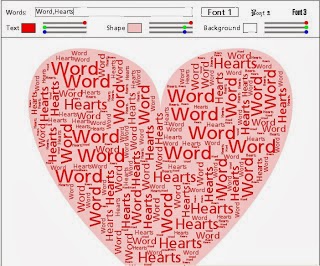
http://www.neoformix.com/Projects/WordHearts/


HERE AND HERE YOU HAVE THE LINKS TO TWO WEBSITES WHERE YOU CAN CREATE YOUR OWN FUNNY E-VALENTINES


GIRLS' STUFF 

ST. VALENTINE'S NAIL ART AND HAIRSTYLES (FOR THE GIRLS)


RECIPES

http://blog.cookingchanneltv.com/2013/02/05/rice-krispies-treats-hearts-recipe-for-valentines-day/

http://www.wendyseewendydo.com/2012/02/i-heart-bacon.html

http://www.petitekitchenesse.com/2012/01/22/egg-in-the-basket/

http://www.wikihow.com/Make-a-Heart-Shaped-Pizza


Document for 1C's 14th February class. Click here.

Monday, 13 January 2014

The ZOBEL on TV

At last, after a long long wait . . .  here you are the VIDEO that POPULAR TV CLM recorded last September in our high school about the bilingual programme.

You can follow the interviews from minute 19.17  to  23.26

Hope you enjoy!


Friday, 10 January 2014

AN AMAZING SHOW or the AURORA BOREALIS

The aurora borealis, also called the Northern Lights, is a multi-colored brilliant light show in the Earth's atmosphere that is caused by the collision of gas particles in the Earth's atmosphere with charged electrons from the sun's atmosphere. The aurora borealis is most often viewed at high latitudes close to the magnetic north pole but during times of maximum activity they can be viewed very far south of the Arctic Circle. Maximum auroral activity is rare however and the aurora borealis is normally only seen in or near the Arctic Circle in places like Alaska, Canada and Norway.
In addition to the aurora borealis in the northern hemisphere there is also the aurora australis, sometimes called the Southern Lights, in the southern hemisphere. The aurora australis is created the same way as the aurora borealis and it has the same appearance of dancing, colored lights in the sky. The best time to view the aurora australis is from March to September because the Antarctic Circle experiences the most darkness during this period. The aurora australis is not seen as often as the aurora borealis because they are more concentrated around Antarctica and the southern Indian Ocean.
The aurora borealis starts with the Sun. It occurs when highly charged particles from the sun's atmosphere move into the Earth's atmosphere via solar wind. They are pulled toward the Earth's poles by its magnetic force. While moving through the atmosphere the sun's charged particles collide with the oxygen and nitrogen atoms found in the Earth's atmosphere and the reaction of this collision forms the aurora borealis.
As the electrons enter the earth's upper atmosphere, they will encounter atoms of oxygen and nitrogen at altitudes from 20 to 200 miles above the earth's surface. The color of the aurora depends on which atom is struck, and the altitude of the meeting.
·   Green - oxygen, up to 150 miles in altitude
·   Red - oxygen, above 150 miles in altitude
·   Blue - nitrogen, up to 60 miles in altitude
·   Purple/violet - nitrogen, above 60 miles in altitude
All of the magnetic and electrical forces react with one another in constantly shifting combinations. These shifts and flows can be seen as the auroras "dance," moving along with the atmospheric currents.
According to the Northern Lights Centre, green is the most common color for the aurora borealis, while red is the least common.

Here you are two videos to enjoy them. Hope you like.


Sunday, 5 January 2014

Diary of a Scot!

Hey Everyone :)

Happy New Year :) I hope you've had a good holiday. I have, I will tell you all about it very soon.
But I just wanted to let you know that I'm flying back to Cuenca TOMORROW!!!! :D

I missed you all and can't wait to see you on Wednesday

Steffi xxxx

Thursday, 19 December 2013